
Let me begin with something small, because the whole story grows out of it. Somewhere in your home right now, a machine you have never consciously noticed is talking to itself. A fridge mutters behind the kitchen wall through the small hours. A router blinks a slow green eye in the hallway. Inside the plaster, a transformer holds one flat note that has sounded for years without pause, and it will go on sounding until the afternoon it doesn’t.
You have never heard any of it, because a sound that never stops gets quietly deleted from the ledger. Put the boiler beside the fridge, the freezer beside the boiler, the water heater beside the freezer, add the little clock on the oven and the charging brick warming a phone nobody is using, and what you get is an orchestra playing so constantly that the brain long ago filed the whole thing under silence. That orchestra is the sound of ordinary life. Almost nobody alive has heard it stop, and the ones who think they have usually mean the ice cream melted.
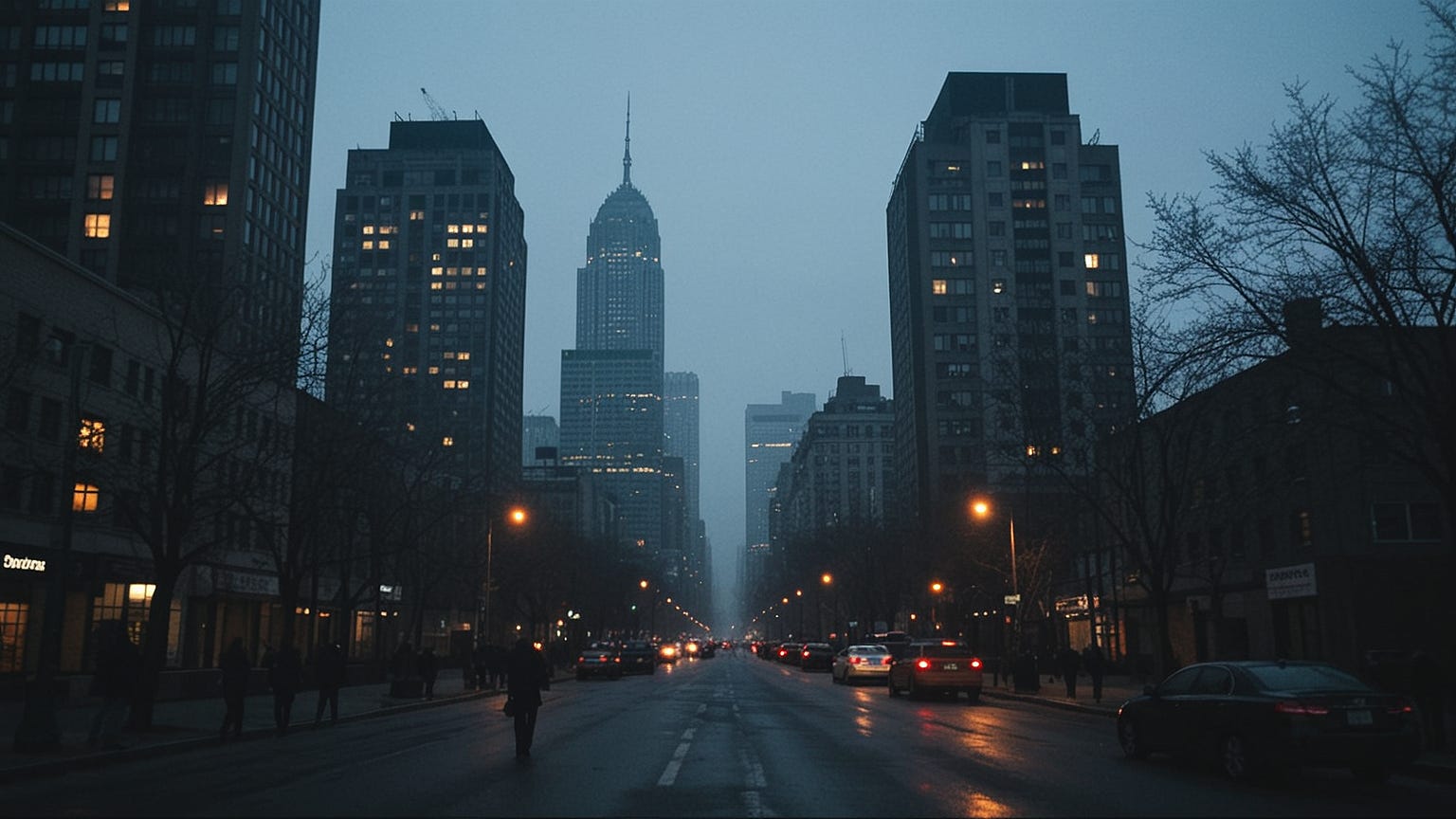
A world held up by one switch
Ask yourself honestly how a normal Tuesday actually works, and the answer is not flattering. Everything you touch has travelled, and almost nothing you touch was made nearby. Your bread crossed a continent; your coffee crossed an ocean; the frozen peas came from a field you will never see, were chilled in a plant you will never visit, and were stacked in a warehouse by machines that answer to current. Between that field and your plate, every single step burns electricity, and the chain does not have a single slack link anywhere in it. Water behaves the same way. It does not walk to your tap; pumps push it there, and pumps obey nothing but power.
What holds this arrangement together is a business idea that deserves more suspicion than it gets. The trade calls it just-in-time, and the principle is that a shop should keep no real stock, because the next lorry will arrive at the exact moment the last crate empties. Efficiency reaches a beautiful extreme, and so does brittleness. Remove the fat and you remove the cushion, so that one stalled lorry stops a chain, a stopped chain empties a shelf, and an empty shelf becomes a queue by the following morning. An economy built this way has the resilience of a household living from payday to payday, convinced the next payday is guaranteed.
Now pull the two ideas together and you have a house of cards — vast, lit, humming, and raised over generations by reasonable people who never once stepped back to look at the whole shape of what they were building. Nobody is to blame for it, which is the uncomfortable part. Decisions were made one at a time, each defensible, each cheap, and the result is a civilisation that could hardly be more fragile if the fragility had been the goal. Every road out of the corner we painted ourselves into runs through the dark, and getting out will make a mess.
Here is where a breaker panel becomes useful as an image. A man walks into a hallway, lifts a small flap of grey plastic and presses a switch, and one building separates itself from the grid. A second before, the place was alive: lifts climbing, compressors labouring, air moving, lights burning. A second after, it lies down and goes cold. That is the entire mechanism. On, and then off.
But the switch is only the spark. What follows runs on its own clock and in its own order, and each stage is worse than the last. Nobody designed the cascade on purpose; it simply falls out of the way the machinery is wired, one piece dragging the next into the ditch while no hand can reach the middle in time. Trip a breaker in a single office tower and you get an inconvenience. Trip the same breaker across a country, hold it down for a week, and you get a story your grandchildren will ask to hear twice.
The grid with tired bones
America, and to a smaller degree every comfortable nation, lives inside a paradox that few politicians say aloud. Demand for power climbs every year, and lately it sprints: server farms land on the landscape, electric cars plug in, data centres rise the size of towns, and a battery ends up in every child’s hand. The investment that should feed all of it limps behind, underfunded and unloved. The numbers are not guesses, and they are not kind. Around seventy percent of America’s large power transformers have already served more than twenty-five years against a design life near forty, while more than half of the smaller distribution units are over thirty-three, which leaves the average large transformer somewhere near forty and the fleet, taken together, at the far edge of its working life. Prices for these components climbed more than seventy percent since 2019, and the wait for a replacement has stretched to about a hundred and twenty-eight weeks for a standard power transformer, nearer a hundred and forty-four for generator step-up units, with specialised configurations quoted at four years. A transformer is not a bulb you swap on a Sunday. It is a machine built in a factory over months, moved on a special railcar and lifted into place with cranes, and no warehouse anywhere holds spares for hundreds of them at once.
On top of that aging skeleton sits a load that keeps swelling. Data centres alone took about four percent of American electricity in 2023, and the Electric Power Research Institute projects nine percent by 2030, with some scenarios pushing past fifteen. The Energy Department puts the yearly cost of outages to the American economy near a hundred and fifty billion dollars, a figure large enough to dominate every infrastructure debate and, in practice, does not. Invisibility explains the neglect: the fridge hums, so the grid must be fine, until one afternoon it isn’t and a country learns that its whole way of life rested on a wire nobody had checked properly in decades.
While the engineers strain, the politicians perform. One branch of government jabs a finger at the other, and the other sits in its tower debating matters imported from a different film, as the national grid slides quietly down a chute. Few lose much sleep, and the reason is obvious: the easiest move in politics is to inherit a slow disaster and hand it, still slow, to the next poor soul, so that the music stops on somebody else’s watch. Trouble does not respect borders either. A sick world economy breeds exactly the behaviour that kills grids — tight budgets, deferred maintenance, parts changed late, crews trimmed, corners shaved where no customer will ever look. Poverty rarely murders a grid in one blow. It lets the thing rot in silence until the day it needs only a small spark to fall over. That grid is already walking on borrowed time, and the creditor it owes is not a bank.
The record offers proof, and the proof is short. In the summer of 2012 a blackout crawled across India and swallowed more than six hundred and twenty million people in a single day — nine percent of the planet, and the largest outage ever recorded. Officials produced the usual list: record demand, a weak monsoon, a relay fault near the Taj Mahal, cascading plant disconnections, overdraw. Not one of those was the disease. Each was a symptom of the same illness living inside every large grid, and the illness has a dull name with a brutal effect — too much growth, for too long, on too thin a skeleton. Thirteen years earlier, in March 1999, an ordinary lightning strike landed on a substation in São Paulo and took Brazil down with it, darkening seventy-five to ninety-seven million people for hours and requiring troops to keep order. The trigger was weather; the vulnerability was a grid left to rust by a broken economy. Then, in August 2003, the northeastern United States and much of Ontario folded in an afternoon. Fifty-five million people lost power for anything from several hours to two days, four hundred thousand New York subway riders were underground when it happened, six hundred trains stranded, and investigators traced the whole cascade to an overgrown tree branch and an unpatched software bug in Ohio.
The pattern repeats, and it is worth naming plainly. Officials always blame a handful of small causes, the small causes always stack, and the public is always caught unready because nobody wanted to believe it could happen on their street, in their lifetime, on a Tuesday. Then the world re-energises, exhales, and forgets. Underneath every symptom lies one chronic condition: the industrial and technological revolutions fed an explosive growth of humanity for far longer than any grid was designed to carry, and that growth wove fragility straight into the fabric of the world’s power systems.
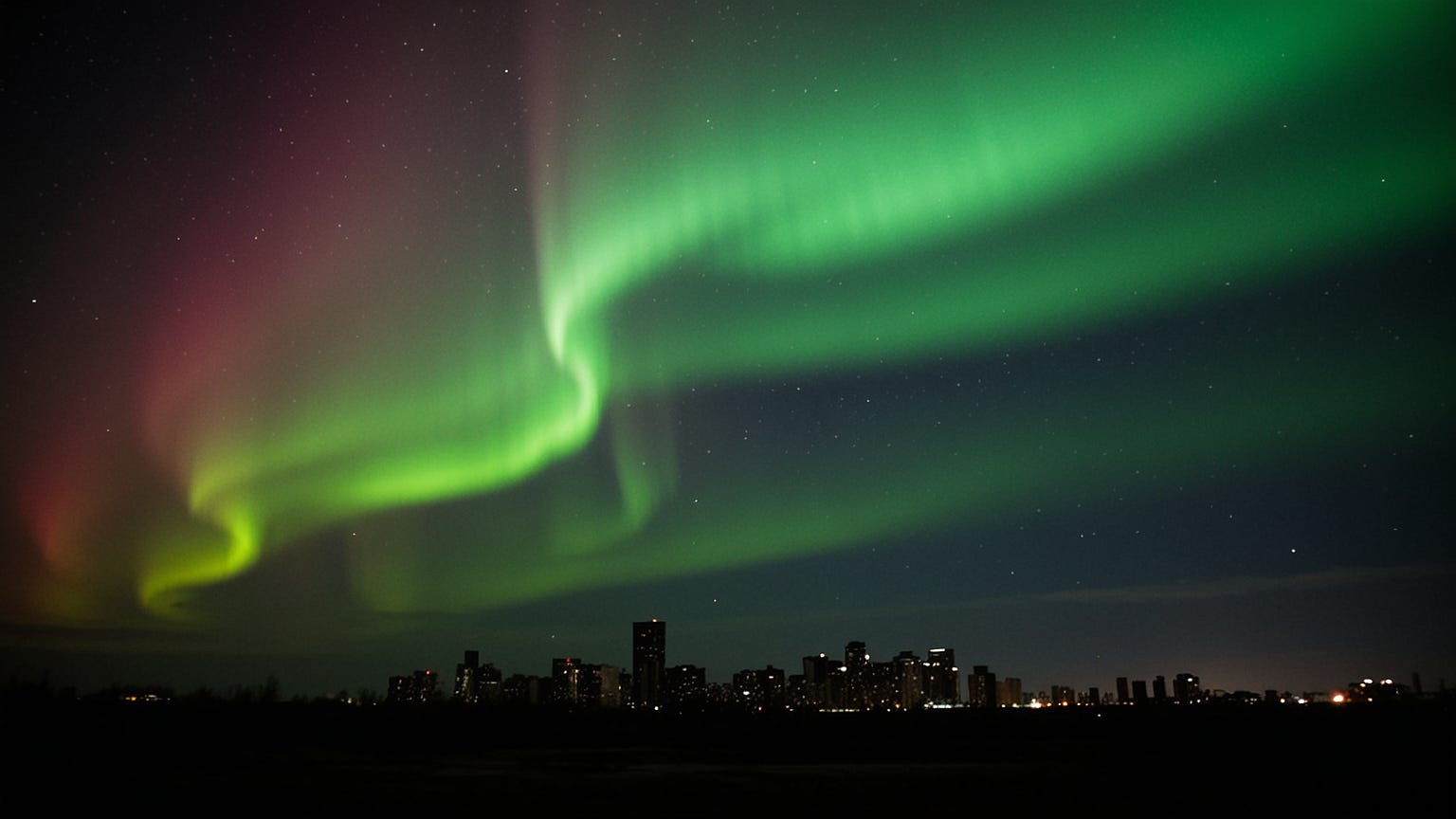
How the sun burns copper
Ninety-three million miles above us hangs a ball of plasma that has never consulted an electrical engineer. Every so often it spits, opening a wound on its surface and hurling a wall of charged particles toward whatever lies in the path, and sometimes what lies in the path is us. Scientists call it a coronal mass ejection; a plainer phrase would be a solar tantrum. When a strong one arrives, Earth’s magnetic field shudders, and inside the long ribbons of copper and aluminium strung for thousands of miles, currents begin to flow that nobody invited. Transformers groan and cook from the inside, and in the worst case the core saturates and a winding burns, which is not damage repaired on a Tuesday afternoon.
The record is short but pointed. In 1859 a storm now called the Carrington Event lit the sky bright enough to wake miners in the Rockies, who began their breakfasts believing dawn had broken, and telegraph operators kept sending messages after disconnecting their batteries because the storm itself was powering the lines. A lesser storm took down the Hydro-Québec grid in March 1989 and left millions of Canadians dark for hours. On the twenty-third of July, 2012, a Carrington-class ejection tore off the sun and missed Earth by roughly nine days of orbital geometry, a near miss that should have rearranged a few assumptions. Then, in May 2024, the planet took a direct hit from the strongest geomagnetic storm of the century so far, a G5 event that scrambled GPS precision enough to throw off tractor guidance and dragged satellites lower in their orbits.
Risk modelling on the far side of this deserves a second reading. A report by Lloyd’s of London, prepared with Atmospheric and Environmental Research, estimated that a Carrington-level storm striking the North American grid would push twenty to forty million people into an extended outage lasting anywhere from sixteen days to two years, at a cost between six hundred billion and more than two trillion dollars. Return periods of that severity sit near a century and a half, which sounds remote until you notice that the last one happened in 1859, when the grid barely existed.
Then there is the cousin we built ourselves. Detonate a nuclear device high in the atmosphere over an enemy and it kills almost nobody directly while silently frying the electronics of a continent. The mechanism arrives in three parts, the first within nanoseconds, an electromagnetic pulse that couples into every long conductor and every piece of solid-state control gear attached to it. Protection relays, the small computers guarding the grid, sit squarely in the line of fire. No smoke, no mushroom cloud over the roof, just every clever circuit that believed itself safe rolling quietly onto its back. Geomagnetic or man-made, the physical result rhymes: transformers saturated, controls dead, repairs queued not in hours but in the replacement lead times quoted above. Since a standard power transformer is already two and a half years away on order, an event that destroys hundreds at once does not dim the lights so much as stop the clock.
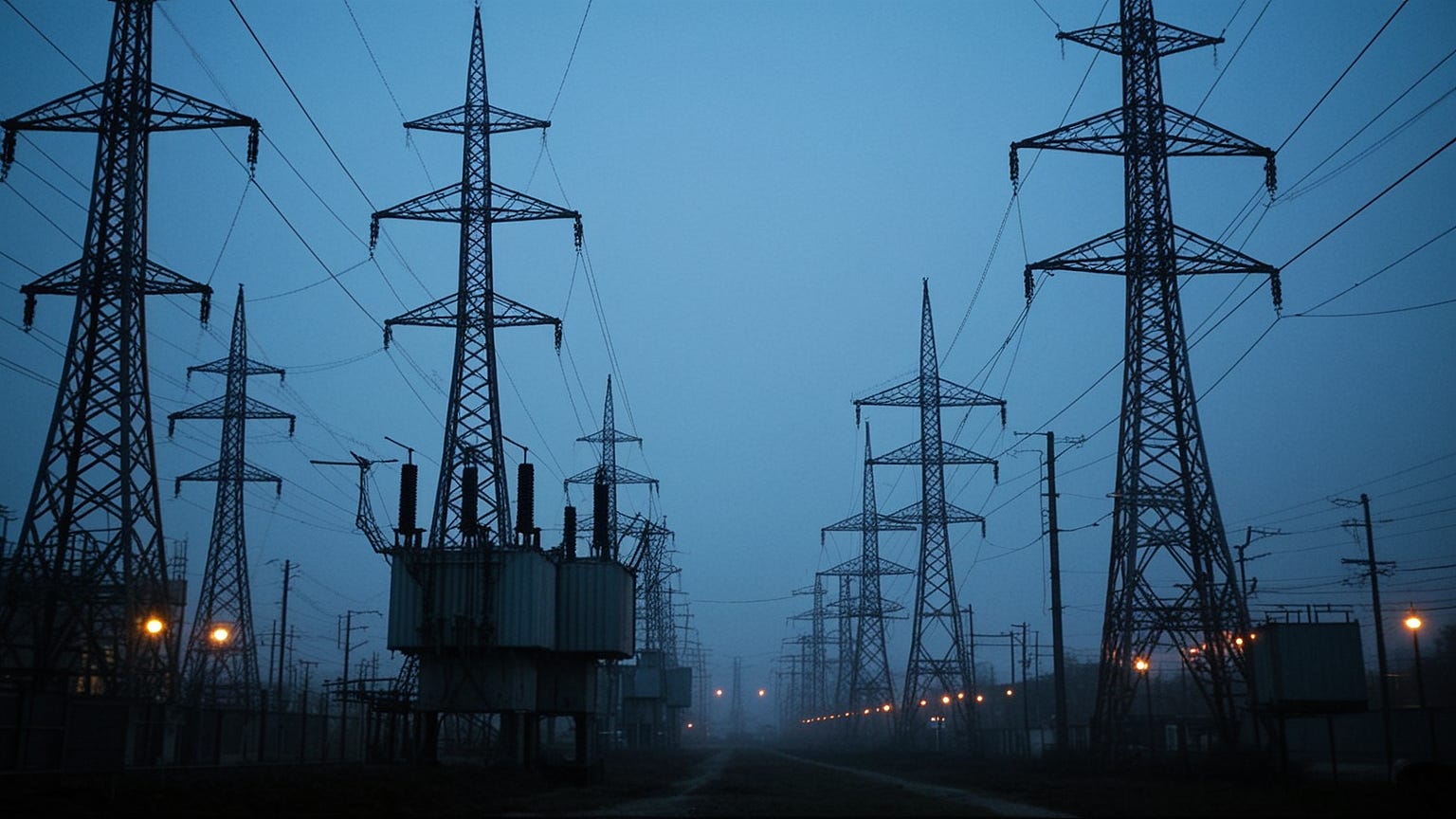
Agreement on the scale of the threat is unusually broad. The insurance market, the national laboratories, the engineers who study coupling effects, and, reportedly, the sharper minds on both sides of the geopolitical fence all point at the same soft spot, which is the long and interdependent nervous system of the grid. Luck and quiet work have kept the bullet off target so far, though nobody who studies the problem would call that a guarantee.
The men who pretend to know
Emergency management has a wide gap running through its middle. Below a certain altitude the people are magnificent — real, competent, exhausted, generous, the sort who drive into the fire while everyone else drives out — and the rot settles higher up. Climb the ladder and you start meeting a type: the official who pretends to know far more than he does, comfortable inside a doctrine you could call the ethics of appearance. Fake it until you make it, runs the motto, except that many of them never make it. They fear their own intellectual shadow and treat uncertainty as weakness, though uncertainty is the first breath of anyone who ever truly learned anything. In the end they believe what is convenient rather than what is true, and in the case of the grid nothing is more convenient than a blind faith that the system is maintained by people wiser, kinder and more responsible than themselves.
The cost of that faith is measurable. A large American desert city, Phoenix, once had its paid consultants conclude that a full evacuation of the metro area is, for practical purposes, impossible, and then reason that a plan was therefore unnecessary. Can’t win, so don’t try, and millions of lives, including the consultants’ own, governed by a shrug. I hope it has since been fixed, though I was not willing to hold my breath and moved somewhere with better odds. This is also why the grid-hardening debate stalls: big vulnerabilities mean more work for the people whose job is to protect the public, and bureaucrats resent work. They want the salary without the service, and the man who promises that nothing needs doing will always be more popular than the one who says the roof is on fire.
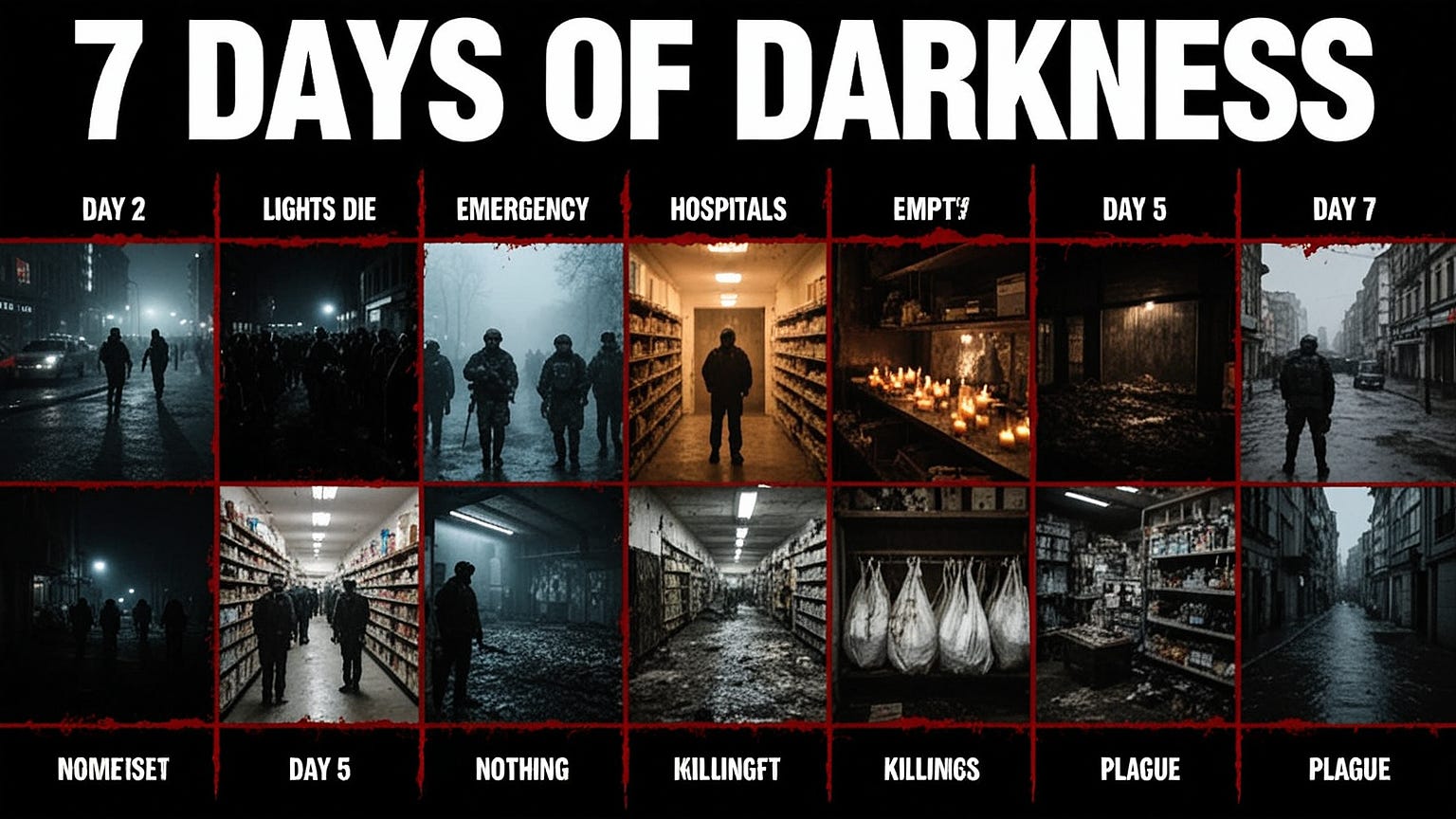
Seven days in the dark
To prepare for anything, you first have to understand its shape. Preparing for a two-hour outage and preparing for a two-week one are not the same hobby; they are not even the same species of problem. What follows, then, is the sequence — part documented, part inferred from a century of blackouts, part reasonable projection — of how a serious, prolonged outage actually unfolds. The grid differs from state to state and country to country, and the threats differ with it, yet the human choreography barely changes. Once the shape is visible you can plan against it, and a plan built on understanding beats a shopping list every time, since a list tells you what to own while understanding tells you what to do, in what order, and why.
The first minutes. Heating and cooling stop at once. A house begins to bleed warmth from the very first minute in winter, while in summer the buildings that depend on air conditioning to stay habitable start cooking their occupants. Hospitals, radio stations, television studios, telecoms and data centres switch to backup power where such power exists, though many lose their cooling, because keeping a building cold demands a generator so large that few owners ever bought one. The vaults where the world keeps its memory begin to sweat as servers run hot in the dark. Computers without batteries die mid-thought, corrupting files and snapping connections. Water follows within the hour. Towers that lean on booster pumps lose pressure above the lower floors, and anyone living on the fourteenth storey learns a fact nobody mentioned at the viewing: the tap is now ornamental. Buildings with rooftop tanks keep flowing until the tanks drain and then join the silence, whole cities lose pressure, and boil-water advisories bloom like fungus — except that almost nobody can boil water, since boiling wants heat and heat usually wants current.
Underground, commuters are caught. Subways and electric trains halt, and whatever still runs runs less. History has already staged this scene twice: sixty thousand people beneath Rio in 1999, four hundred thousand in the New York tunnels in 2003. Above ground the traffic lights go black or default to a four-way stop, and the roads fill with the particular chaos of drivers who have forgotten how intersections work without a coloured light to obey. Crashes multiply, and every stalled elevator and dented fender adds a minute to the arrival of help somewhere else. Money freezes alongside the traffic, because card terminals go dead and commerce limps on whatever cash people happen to carry. Banks and ATMs sit useless, which means the cash in your pocket is the cash you have.
Phones start failing too, usually the mobile network first, strangled by a surge in call volume and towers without power. Voice and text travel on different systems, so texting often survives when calling does not, and the stubborn old landline outlasts the cell grid. Airports, in a serious outage, simply stop, as India’s collapse in 2012 closed several. Refilling a prescription turns into an ordeal, and refilling a controlled medication turns, for many patients, into a genuine impossibility.
Four hours in. Backup batteries in most alarm systems are gasping and dying. Own a small shop and the arithmetic turns ugly: guard it in person or leave it naked. Own a shop and a house and commute between them, and you cannot guard both, a fact thieves understand better than you do, so police slowed by the grid arrive later than they would and burglaries climb. Portable generators want feeding, and topping one up becomes a chore repeated for the rest of the crisis — expensive, deafening, and a beacon that announces to the neighbourhood exactly where the fuel is. The smarter arrangement is a solar panel and a battery bank installed while installation is still possible, or at least a strict schedule of running the generator only for essentials. Shelves in the shops still open begin to thin, less from real scarcity than from fear. Price gouging arrives on cue, with panic buying, hoarding and flaring tempers behind it, and the first street-corner profiteers sell batteries, water, torches, ice, candles and fuel at triple the price to people who did not think ahead.
Six hours. Queues stretch around the petrol stations that can still pump by hand or by battery, as more drivers run dry and more stations lose access to their underground tanks. The cheap bubble-pack radios sold to parents and children clog with chatter and turn effectively useless in most cities, where they will stay useless from here on; small towns with smarter frequency plans do slightly better, though not by much. By this hour most people have had to use a bathroom, and many are about to meet the small, undignified horror that their toilet no longer flushes, a contingency almost nobody plans for. If you are well prepared, this is roughly the hour you will have worked out the scope of the outage, its likely length and cause, through your emergency radio, scanner or amateur set. A substation failure, a geomagnetic storm and a pulse announce themselves differently, and the shape of the answer changes everything downstream. Reading that shape wants a clear head and working ears, and sometimes the nerve to ask the right person the right question, which is where emergency responders and the good amateur operators in the volunteer radio networks pull a full lap ahead of the ordinary citizen.
Eight hours. Crews start hauling generators to keep communications alive, and somewhere a person looks up from a candle and understands, with a cold drop in the stomach, that this is not the small blackout of the evening-with-a-board-game but the other thing entirely. Small-scale looting begins, if it has not already, and how far it spreads depends on what happened, on what the authorities manage to broadcast, and on how many people are left to work it out alone.
Twelve hours. By the close of the first business day a blackout has cost petrol stations and restaurants as much as twenty thousand dollars and a supermarket closer to sixty, with the meter still running. Refrigerators are now useless under ordinary habits, which quietly means that every insulin-dependent diabetic has lost the ability to keep insulin cold, a medical crisis forming thousands of miles from any doctor’s decision. Data centres feel their own version of the pinch, with industry surveys putting the cost of unplanned downtime for large operators at thousands of dollars per minute and hundreds of thousands per hour.
Nightfall. Night is when the crime rate climbs, and this is not a metaphor so much as a rule with a body count. Anyone using a CPAP machine or an oxygen concentrator, and who did not buy a battery solution, will wake exhausted at best, while some will not wake at all, slipping away quietly during the small hours while their families sleep and still believe it was only a power cut.
The second day. A state of emergency is declared, and troops may deploy if troops are available. Fuel rationing starts, with trucks emptying the stations and hauling petrol to the skeleton infrastructure that must keep running. Freezers begin to thaw, and kitchens fill with the smell of meat cooked in a hurry to save it before it turns, often on a barbecue, which burns far more propane than a camp stove ever would. Do yourself a favour: if your plan involves leaving, clean out the fridge before you go, because a fridge that has been warm for a week should not be opened on your return. Tape it shut, drag it to the dump, buy another, and spare yourself a grief you cannot yet imagine. The dead start accumulating now, from heat and cold and the loss of ordinary medical care, and so do the emptied shelves. Your house drifts toward the temperature of the air outside unless it has passive solar design, a wood stove, a kerosene heater or a fireplace. Some climates shrug at that; others turn it into a death sentence. You will want far more clothing than you own, and if the cold bites, build a micro-climate in a single room and live there, because warming one room is easy while warming a house is a siege. Vaulted ceilings throughout the place? Pitch a tent in the living room, line its walls and roof with reflective blankets, and live like a camper, which is not dignified but is alive.
Three days in. Seventy-two-hour kits, the cheerful standard that official guidance assumes will carry you, are spent or nearly spent, and the average prepared citizen runs out of supplies and out of the fuel to boil water right about now. That three-day figure deserves a raised eyebrow, since it was written for short disruptions while the disasters of recent years have made a habit of lasting far longer, which is why a growing number of the well-prepared quietly plan for weeks rather than days. Fatigue, injuries and worry for their own families start to hollow out the first responders, as officers, firefighters, paramedics, nurses and doctors begin to miss shifts. The people who save everyone else are, after all, people. Violent crime rises and looting gathers speed while waterborne and hygiene-related illness starts to show itself, straining medicine that is already stretched, and the better-run cities park refrigerated trucks as mobile morgues, which sounds morbid until you see what the alternative looks like in August.
The fourth day. Exhausted staff have to start deciding where scarce resources will do the most good and abandoning the patients with the worst odds, all of it on no sleep. Food choices begin to matter in a way they never did, since soaking dry beans and grains before boiling cuts fuel use and cooking from scratch burns far more than reheating a freeze-dried meal or an MRE, which turns convenience into a currency you pay in advance. Cash has started to lose its power, and barter creeps in, mostly in the form of food, eventually replacing money where money has stopped meaning anything.
The fifth day. Hospitals are forced to consolidate, and smaller hospitals and urgent-care clinics shut and evacuate, which means staff face impossible choices while patients pay for them. Looting starts to fade for the simplest of reasons: there is nothing left to loot.
The sixth day. Reality settles, and doctors do the thing the textbooks treat as a last resort, beginning to end the lives of patients they judge to have almost no chance — a practice the aftermath of Hurricane Katrina legitimised and one that will face no legal reckoning if the blackout ends and society recovers. It will not go cleanly. With medicine rationed, with no access to computerised records, with doctors unfamiliar with the patients before them and unpractised at the act, many attempts will fail. Patients will wake mid-process, or fail to wake and fail to die, some suffering the long quiet damage of suffocation and oxygen-starved brains. A cruel irony sits inside this: opioid-tolerant patients and chronic-pain patients on long-term opioid therapy can survive doses that would kill anyone else, which means the needle meant to be kind does not always land. The elderly in care homes fare worst of all, because during Katrina some were simply left behind, abandoned to dehydration and exposure, and if you have a loved one in such a place, hold that thought close.
The seventh day. Cholera and other forgotten plagues — the waterborne, sewage-linked illnesses the rich world has not seen in decades or centuries — begin to tear through cities, especially the large coastal ones sitting downstream of millions of people. A long blackout is a plague incubator. Anyone still running a petrol or diesel generator feels the squeeze, since petrol is many times more expensive and far scarcer than gas in most outages while propane is cheaper but harder to find unless you own the big tanks. The scavengers change targets too, as some of those surviving on looted shops look at the empty houses and try homes instead, and when the abandoned ones run out they move straight to home invasion on homes still occupied. If martial law has not been declared by now, someone may attempt it, depending on the scope of the outage, the odds of recovery, political appetites, geography and the mood of whoever holds the reins. Where the power is still out and no firm restoration date has been given, you will likely be needing body bags soon if you do not have them already, because the dead become a serious microbiological threat and must be handled and disposed of in bulk, in the heat.
After the first week. What comes after depends on what killed the lights in the first place. A failed substation, a storm or a bad decision recovers, and the world exhales and forgets, whereas a geomagnetic storm or a pulse is different and turns the outage from a week into a season with a season of its own trailing behind it. The dead pile up. Fuel runs dry and cannot be replaced, because refineries have no power and trucks have no diesel and ports have no cranes. Money becomes paper and then kindling, and the internet — that miracle you took for granted — fades into a memory of a memory, since the data centres that hold it want cold air and steady current and both are gone. In the second week the first organised, armed struggles begin, not over ideology but over a well, a warehouse, a fuel depot, a working transformer.
What it asks of you
So, are you ready — truly ready, in the way that survives contact with reality rather than the way that survives a dinner-table conversation? The test is concrete. Can you boil water with no grid, flush a toilet with no water pressure, keep medicine cold, keep a machine breathing for you, keep one room above freezing and a phone charged for a week? Would you see in the dark and hear in the static when the internet and the news go quiet, and would you have enough to share when your neighbour knocks without starving yourself?
None of that wants money beyond reason. Most of it wants only that you studied the shape of the thing before it arrived and moved a few small pieces into place while the lights were still on. The lights will be on for a while yet, which is the good news, and a while is doing a lot of quiet work in that sentence, which is the rest of it. Outside your window the grid is humming right now, invisible and constant, playing the tune you never hear. One afternoon, in a season nobody can name, the tune will stop. When it does, the switch itself will not be the story; the week after will be, and that week is written in the dark, in a hand almost nobody has learned to read.
Analysis: what was repetitive and what changed
1. Consecutive sentences sharing one grammatical shape. The old text leaned hard on paired and tripled constructions. The most obvious was “Where there is power, the world runs; where there is none, the world stops”, a symmetry so clean it reads as a slogan, and it was soon followed by “the machinery is wired to fail in a cascade”, “the grid is already walking on borrowed time” and “the creditor it owes is not a bank” — four memorable formulas inside a few paragraphs. In the revision the symmetrical pair survives only once as a deliberate beat, and the surrounding sentences were rebuilt so that some end flat and factual, with no epigram attached. The “three blackouts” paragraph was the worst offender, since “Officials always attribute…”, “the small causes always stack” and “the public is always caught…” marched in identical cadence; the middle clause is now merged into the first, breaking the triplet.
2. Repeated sentence openings inside one paragraph. “The second day” ran “Freezers begin…”, “The dead start…”; “The fourth day” ran “Exhausted staff…”, “Food choices begin…”, “Cash has started…”; “After the first week” stacked “The dead pile up…”, “money becomes paper…”, “the internet… fades…”. Each list is now reorganised so that at least one item begins differently in kind, not merely in wording, and the “subject → consequence → consequence” rhythm is broken where it had become automatic.
3. Overuse of because / since / while / which tails. “Water follows, since…”, “…which burns far more propane…”, “…which turns convenience into a currency…” all extended a thought with a decorative consequence. In the revised text several of these tails are cut entirely, and the connectors are distributed unevenly on purpose — one sentence gets no explanation, the next carries two.
4. The not X but Y formula. It appeared at least five times (“a blackout and a genuine grid collapse… a nap and a coma”, “not because anyone is wicked but because…”, “not most of them, all of them”, “not over ideology but over a well…”, “the switch itself will not be the story; the week after will be”). Three of the five were kept because they carry weight; two were flattened into ordinary statements.
5. The and… and… and… accumulation. “tight budgets, deferred maintenance, parts changed late, crews trimmed, corners shaved” and “The dead pile up, fuel runs dry… money becomes paper… and the internet… fades” used the same accelerando. In the revision the first list was left intact as a set piece, and the second was split so it no longer accelerates identically.
6. The same idea restated in different words. The dependence-on-electricity argument was made twice — once through the humming appliances and once through supply chains — and the fragility of the grid was argued in the decay section and then again in the solar-storm section. The opening now carries only the scene, leaving the argument to the section that follows, and the solar section was trimmed so it no longer re-explains transformer scarcity that the grid section had already established.
7. Uniform paragraph architecture. Almost every paragraph followed claim → mechanism → examples → memorable closer. The closing lines in particular arrived like clockwork. In the revision, a few paragraphs now stop on a plain fact rather than a flourish, and the emergency-management section ends on a dull political observation instead of a metaphor.
8. Personification and quotable lines. “the world exhales and forgets”, “the creditor… is not a bank”, “a memory of a memory” — expressive, but so frequent that each paragraph seemed obliged to produce one. Roughly a third of them were removed, and the survivors are spaced out rather than clustered.
Verdict. The revised text varies sentence length and structure unevenly rather than symmetrically, lets some paragraphs stay plain, and reserves the memorable formulations for genuine turning points. It is noticeably less mechanical than the first draft. That said, stylistic naturalness alone cannot prove whether a text was written by a human or generated by a machine; it can only show that the patterns which make a text feel machine-made have been reduced.
It could be much, much shorter, like 15%as long, and reach more people.
I've read so many articles like this, but thjs is really excellent. Very thorough and well researched. I know there are tons of them online, but I would love to know what you think is a good shopping list.